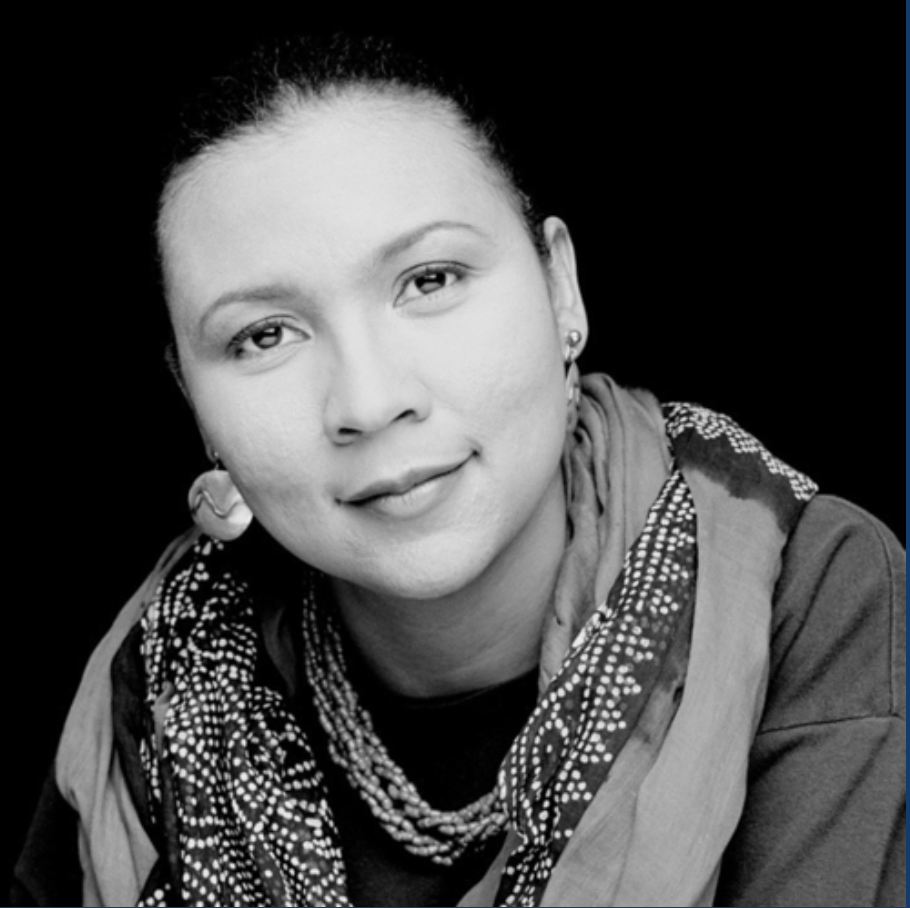
bell hooks (1952–2021)
bell hooks was a USA author, feminist, cultural critic, teacher, and social theorist whose work transformed discussions of feminism, race, class, education, masculinity, and love. Born Gloria Jean Watkins in 1952 in Hopkinsville, Kentucky, she adopted the pen name “bell hooks” in honor of her maternal great-grandmother, a woman known for her strong and outspoken personality.
Growing up in a segregated Kentucky community, hooks experienced both the limitations imposed by racism and sexism and the possibilities created by education. She attended Stanford University, earning a bachelor's degree in English, and went on to receive a master's degree from the University of Wisconsin–Madison and a Ph.D in English literature from University of California, Santa Cruz.
Her first book, Ain't I a Woman: Black Women and Feminism, examined the historical effects of racism and sexism on Black women and criticized both mainstream feminism for frequently overlooking race and class, and Black liberation movements for often overlooking gender. The book established a central principle of her thought: systems of domination cannot be adequately understood in isolation from one another.
In her book Feminist Theory: From Margin to Center hooks envisioned feminism not simply as a movement for gender equality, but as a struggle against sexism, racism, class exploitation, and other forms of domination.
In her book Teaching to Transgress: Education as the Practice of Freedom (1994), hooks argued that classrooms should be spaces of liberation. She developed a vision of “engaged pedagogy” in which teachers and students participate actively in the creation of knowledge.
In The Will to Change: Men, Masculinity, and Love (2004) she argued that patriarchy harms men by teaching them to suppress vulnerability, emotion, and the capacity for love. In her later work All About Love: New Visions (2000), she asserted that love should be understood not merely as a feeling but as a practice involving care, responsibility, respect, knowledge, and commitment.
Throughout her career, hooks crossed the boundaries between academic scholarship and popular writing. She wrote about culture, education, relationships, feminism, race, and social justice in language intended to reach people outside universities.
Her legacy encompasses feminist theory, critical pedagogy, cultural criticism, and a philosophy of liberation rooted in the possibility that human relationships—and society itself—can be transformed. For hooks, education was not simply preparation for life. Education could be a practice through which people learned to become freer.
books
Ain't I a Woman: Black Women and Feminism (1981)
Feminist Theory: From Margin to Center (1984)
Talking Back: Thinking Feminist, Thinking Black (1989)
Yearning: Race, Gender, and Cultural Politics (1990)
Black Looks: Race and Representation (1992)
Teaching to Transgress: Education as the Practice of Freedom (1994) ⭐
Art on My Mind: Visual Politics (1995)
All About Love: New Visions (2000) ⭐
Feminism Is for Everybody: Passionate Politics (2000) ⭐
The Will to Change: Men, Masculinity, and Love (2004)
Belonging: A Culture of Place (2009)
Teaching Critical Thinking: Practical Wisdom (2010)
quotes
“The classroom remains the most radical space of possibility in the academy.” — Teaching to Transgress
“To educate is the practice of freedom.” — Teaching to Transgress
“Love is an act of will—namely, both an intention and an action.” — All About Love
“The moment we choose to love we begin to move against domination, against oppression.”
— Outlaw Culture